The Author
On writing, London, and the long patience of fiction.
What follows is less a biography than a reckoning. Writers are notoriously unreliable narrators of their own lives — we rearrange, we soften, we reach for the image that carries more weight than the fact. You have been warned.

Edinburgh, 2023. Photograph by Callum Reed.
Beginnings
I grew up in a house where books were stacked on every horizontal surface — windowsills, bathroom floors, the broad arms of a sofa that had given up its structural ambitions long before I was born. My mother was a librarian in Inverness; my father a secondary school English teacher who marked essays at the kitchen table until eleven o'clock most nights. Fiction was not an aspiration in our house. It was the furniture.
I went north to study at the University of Edinburgh — English Literature, naturally — and I simply never left. There is something about this city that resists departure: the stone that absorbs winter light differently from any other stone I have encountered, the way the Old Town seems to exist in at least two centuries simultaneously, the particular quality of silence on a Monday morning in the Meadows. I have tried to leave twice. Both times Edinburgh held.
The first story I published was in a small literary journal that no longer exists. It was twelve pages long, set in a ferry terminal on the west coast of Scotland, and concerned — if I am being honest — nothing very much at all. The editor, a formidably impatient woman named Helen Cairns, accepted it with a handwritten note that read: You can write. Now find something to write about. I kept that note. I still have it, somewhere.
The Novels
The Inheritance of Water took four years to write and another two before it found a publisher. It was rejected by fourteen agents, accepted by the fifteenth — Miranda Calder at Calder & Leigh, who remains my agent today and who, I am convinced, has better editorial instincts than most editors. It was published by Faber in 2011. I was thirty-four. I remember sitting with the finished book in my hands and feeling not triumph but something closer to bewilderment: that the thing in my head had become a thing in the world, and that I was now somehow responsible for explaining it.
The second novel came faster and was harder. What the Light Does arrived in 2015, and in the writing of it I began to understand something I have since tried to articulate to every student I teach: that the second book is where you discover whether the first was an accident. The longlisting for the Booker that year felt, to be exact, surreal. I was in a café in Stockbridge when Miranda rang. I walked home in the rain without noticing.
Every Cartographer Lies, my most recent novel, came out in 2021. It is the book I am most afraid of and therefore, probably, the one I am most proud of. It has since been translated into eleven languages — a fact I find both astonishing and faintly absurd. Somewhere in Japan, in Brazil, in the Netherlands, there are strangers reading words I wrote in a flat on Broughton Street on dark winter mornings, a blanket over my shoulders, a pot of tea going cold beside the keyboard. This strikes me as the whole miraculous point of the form.
“The novel is the last long form. It asks something of the reader that nothing else asks — sustained, private, interior attention. I think that is worth defending.”
— From an interview with The White Review, 2022
Edinburgh
People ask whether Edinburgh informs the work. This feels like asking whether water informs swimming. Every novel I have written is set, in whole or in part, in this city — though I have tried, with varying success, to disguise the fact. The closes and wynds of the Old Town appear in The Inheritance of Water as something darker and more Gothic than they are on a June afternoon; the New Town in What the Light Does is rendered in a kind of melancholy Georgian light that I suspect owes more to November than to Georgian architecture. Edinburgh lends itself to fiction because it is already, structurally, a kind of fiction: two cities occupying the same geography, the medieval and the rational, the stone and the sky.
I live now in the same neighbourhood I have lived in for fifteen years — a flat on a hill, with a view that I tell myself I will paint one day, and which I never paint because writing consumes the hours. My neighbours include a retired professor of jurisprudence and a family with three extremely vocal children whose arguments, conducted at high volume through very thin walls, have found their way into my fiction more than I would care to admit.
The Work
I write in the mornings, usually from seven until noon, with no email and no telephone. Afternoons are for revision — the slower, cooler thinking — and evenings for reading, which I regard not as leisure but as professional obligation. I have taught creative writing at the University of Edinburgh for the past eight years and I find, to my continued surprise, that teaching sharpens rather than drains the work. Articulating what a sentence is doing forces a kind of critical attention I would otherwise let slip.
The fourth novel is in progress. I have been saying this for two years. It is not a comfortable book to be writing — it asks more of me than any of the others — and I have learned enough about myself to know that discomfort, in this work, is usually a sign of proximity to something real. I expect to finish a first draft by winter. I have been saying that, too.
I am represented by Miranda Calder at Calder & Leigh Literary Agency, London. For rights enquiries, speaking engagements, or events, please contact the agency directly. For everything else — and I mean this genuinely — there are the books.
At a glance
7
Published novels
11
Languages translated into
2015
Booker Prize longlist
Captivate Publishing
Publisher
London
Based
Selected press
“A writer of rare and deliberate beauty.”
— The Guardian
“She writes sentences that make you stop and read them twice.”
— The TLS
“One of the most precise literary imaginations working in British fiction today.”
— New Statesman
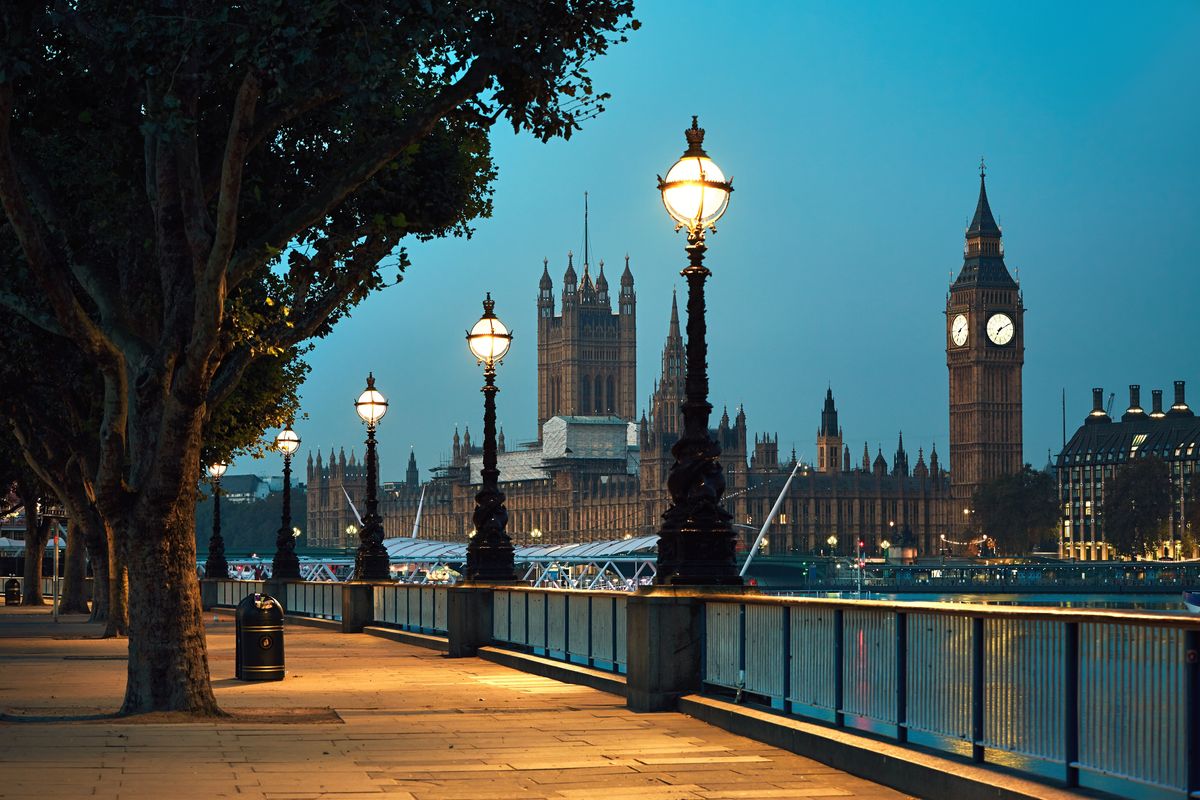
London, the city that holds.
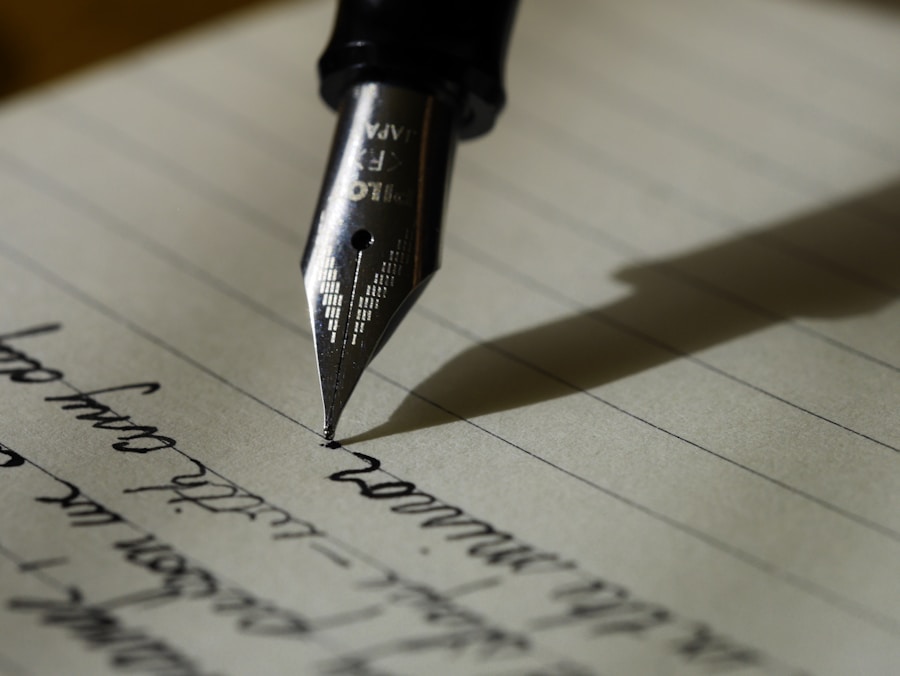
The desk, approximately seven in the morning.
“Discomfort, in this work, is usually a sign of proximity to something real.”
— Eleanor Voss
Teaching
Creative Writing
ZENA has taught Creative Writing for several years, where she runs an advanced prose workshop for postgraduate students. The course concerns itself with what she calls the mechanics of attention — the technical choices that determine whether a sentence is alive or merely grammatical.
She also tutors at the Arvon Foundation and has been a visiting writer at the Bread Loaf Writers’ Conference in Vermont. She does not have a podcast.
Events & Enquiries
Speaking & festivals
ZENA speaks at literary festivals, university events, and cultural organisations when the schedule permits. She has appeared at Hay Festival, Dublin Writers Festival, Cheltenham Literature Festival, and others.
All enquiries regarding events, speaking engagements, rights, and media should be directed to Captivate Publishing.